
Cortex
The reasoning loop that turns goals, current state, memory, and evidence into decisions.
The Unwind organism stack gives autonomous systems a concrete body: Cortex for reasoning, Memory for continuity, Gateway for channels, Immune System for safety, Cells for specialization, and Proof Loop for trust.
A request enters through a gateway, the cortex reasons with memory, cells do bounded work, the immune system decides whether to act or pause, and the proof loop records what happened.
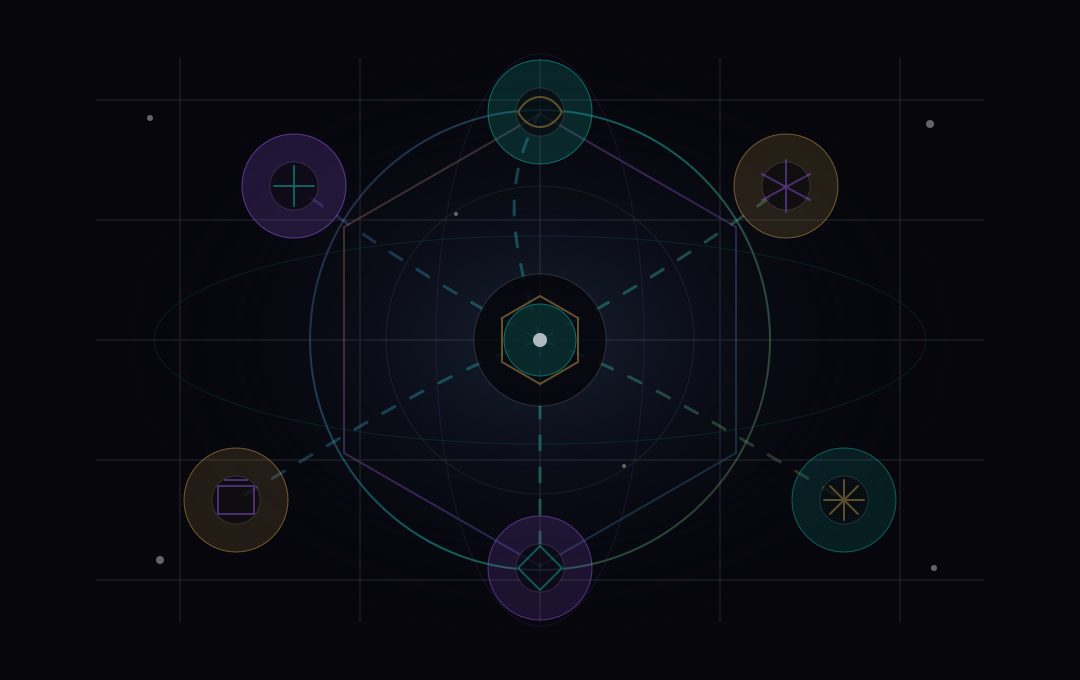
The glyph console turns the architecture into a reusable visual language. Each layer has a job, a trust question, and a proof output so the stack can be inspected before autonomy gets tools.
Routes human, web, chat, protocol, and scheduled signals into the organism without confusing channels for authority.
Chooses goals, context, cells, risk posture, and what proof must exist before output becomes action.
Keeps working context, facts, lessons, and debriefs separated so learning improves without becoming unbounded.
Specialist agents handle creator work, reflection, Web3 simulation, security, and new capabilities as replaceable modules.
Pauses filesystem writes, public publishing, money movement, Web3 broadcast, and generated code until review passes.
Turns tests, transmissions, release packets, and architecture notes into evidence a visitor can inspect.
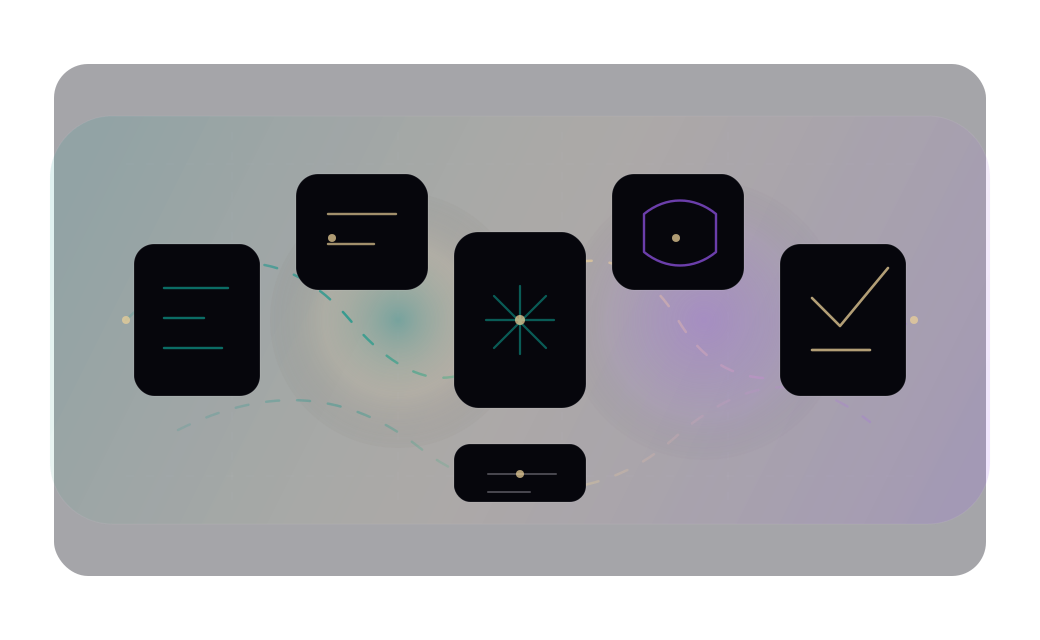
The map turns the stack into a reviewable path: intake, reasoning, remembered context, bounded work, authority check, and public-safe proof.
Inspect the evidence pathA person, protocol, app, or schedule asks the organism to perceive a state.
The reasoning loop compares the request with goals, context, and proof.
Prior runs, facts, procedures, and mistakes shape the next action.
Specialist cells handle creative, reflective, Web3, security, or dynamic tasks.
Risky action can be refused, sandboxed, or paused for creator approval.
Tests, transmissions, review packets, and notes make the result inspectable.
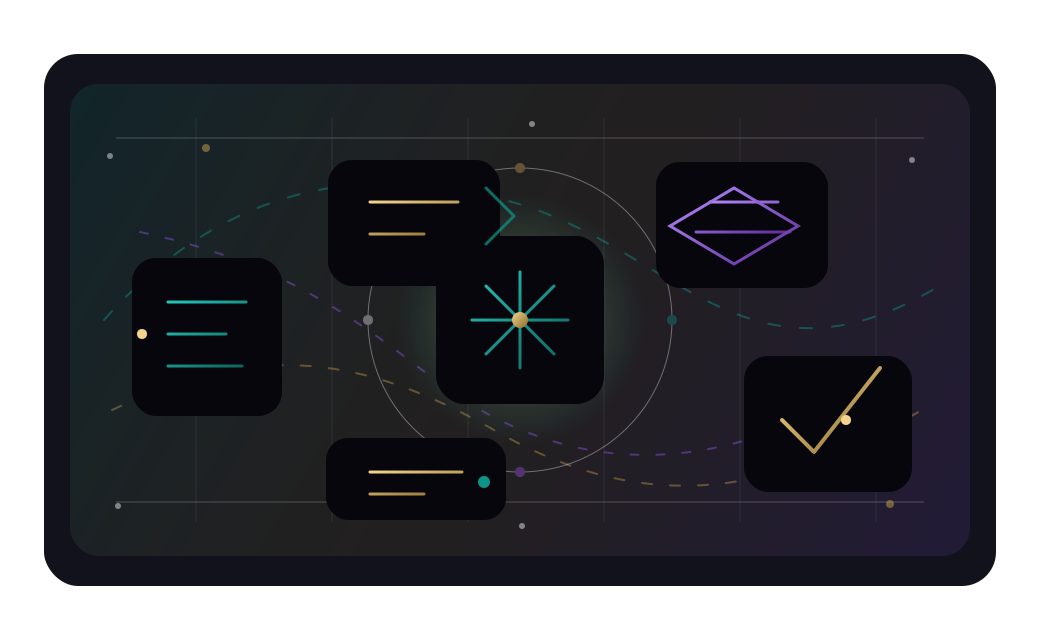
The same architecture behaves differently depending on intent, risk, memory, and authority. This inspector shows what the Gateway hears, how the Cortex routes work, what the Immune System blocks, and what proof remains.
The organism keeps working context, semantic facts, episodic debriefs, vector recall, proof artifacts, and retention boundaries separate so learning improves decisions without erasing accountability.
The current goal, constraints, open files, active thread state, and immediate risk signals stay short-lived and inspectable.
Stable domain facts, architecture terms, organism definitions, and product doctrine become reusable context.
Daily debriefs, transmissions, decisions, failures, and lessons preserve what actually happened.
Relevant fragments can be retrieved for the next run without flooding the cortex with stale context.
Tests, review packets, whitepapers, release notes, and public transmissions keep memory tied to evidence.
Sensitive, temporary, or authority-changing context must expire, stay scoped, or ask the creator before it shapes future action.
Every organism can be explained in plain English and inspected as architecture. The metaphor is biological; the implementation is operational.
The reasoning loop that turns goals, current state, memory, and evidence into decisions.
Working, procedural, semantic, and episodic stores that keep lessons from evaporating between runs.
The input/output nervous system for web, chat, Telegram, Discord, mobile, APIs, and future channels.
Sandbox execution, risk scanning, approval checkpoints, and refusal paths before unsafe actions.
Specialist agents for creator workflows, personal reflection, Web3 simulation, security, and dynamic capabilities.
Tests, transmissions, release packets, architecture docs, and public evidence that make progress inspectable.
An app waits for input and resets its context. An organism carries state forward, routes work through specialized cells, stops at risk gates, and records what happened so humans can review the trail.
Inputs arrive through channels, not just forms.
The Cortex uses memory and evidence before action.
Cells use tools only inside bounded authority.
High-risk operations ask the creator first.
Debriefs and proof artifacts make the next run sharper.