The brain that builds brains.
Brain Cell Architecture is the reusable process for creating new AI organism capabilities. A cell is not trusted because it was generated. It is researched, bounded, sandboxed, tested, reviewed, and then integrated.
Self-evolution needs an immune system.
Brain Cell Architecture gives generated capability a path through research, sandbox tests, approvals, source control, and proof before it becomes part of an organism.
- Stage
- Experimental pattern for new organism capabilities.
- Input
- Domain problem, risk boundary, memory needs, tools, and proof requirements.
- Cells
- Research, architecture, sandbox, approval, integration, and proof loops.
- Boundary
- Generated code is inert until tests, approvals, and source-control review pass.
- Proof
- The checkpoint whitepaper and proof ledger explain how cells grow under governance.
What Brain Cell Architecture can grow, what stays quarantined, and where proof lives.
Before lifecycle visuals turn self-evolution into a story, the page names the growth boundary: signal, research packet, sandbox trial, approval, integration, and rollback. A candidate cell can be proposed; it cannot join the organism until proof says yes.
-
01 / Signal
Turn repeated failure into a scoped cell brief.
The architecture can notice when a prompt loop is no longer enough and convert the pattern into a bounded problem packet.
- Input
- Repeated failure, missing capability, domain need, operator context, and constraints.
- Output
- A scoped problem packet and candidate cell brief.
- Blocked claim
- No hidden self-modification, autonomous code execution, or unreviewed filesystem write.
- Proof route
- Follow the lifecycle map
-
02 / Research
Research the cell before code earns attention.
A generated class is not trusted because it sounds plausible. The research packet names assumptions, interfaces, tests, risk, and rollback first.
- Memory boundary
- Only reviewed failures, source context, public docs, and proof artifacts inform candidate design.
- Output
- A research packet with assumptions, sources, interfaces, tests, and rollback plan.
- Blocked claim
- No generated cell becomes trusted because it compiles or reads well.
- Proof route
- Read the cell swap protocol
-
03 / Sandbox
Run the candidate as evidence, not authority.
The sandbox can test fixtures, failure traces, dependency behavior, and repair attempts without granting host or production authority.
- Tool boundary
- No host command, money movement, deployment, public posting, wallet call, or production load.
- Output
- Test results, failure traces, risk note, diff intent, and proof packet.
- Blocked claim
- No external side effect or capability joining runtime on first pass.
- Proof route
- Inspect the runtime console
-
04 / Integration
Integrate only after review can still say no.
A passing cell remains replaceable. Approval, source control, documentation, memory summary, proof ledger, and rollback decide whether it joins.
- Approval boundary
- Human review, source-control history, proof packet, and rollback path approve or refuse integration.
- Output
- An integrated or refused cell with visible proof and a rollback route.
- Blocked claim
- No irreversible self-evolution, hidden memory write, authority expansion, or unreviewed autonomy.
- Proof route
- Inspect the authority gate
A new capability stays quarantined until proof says it can join the organism.
Brain Cell Architecture makes neurogenesis inspectable: a failure or need becomes research, then a bounded candidate cell, then sandbox evidence, immune review, human approval, and only then integration.
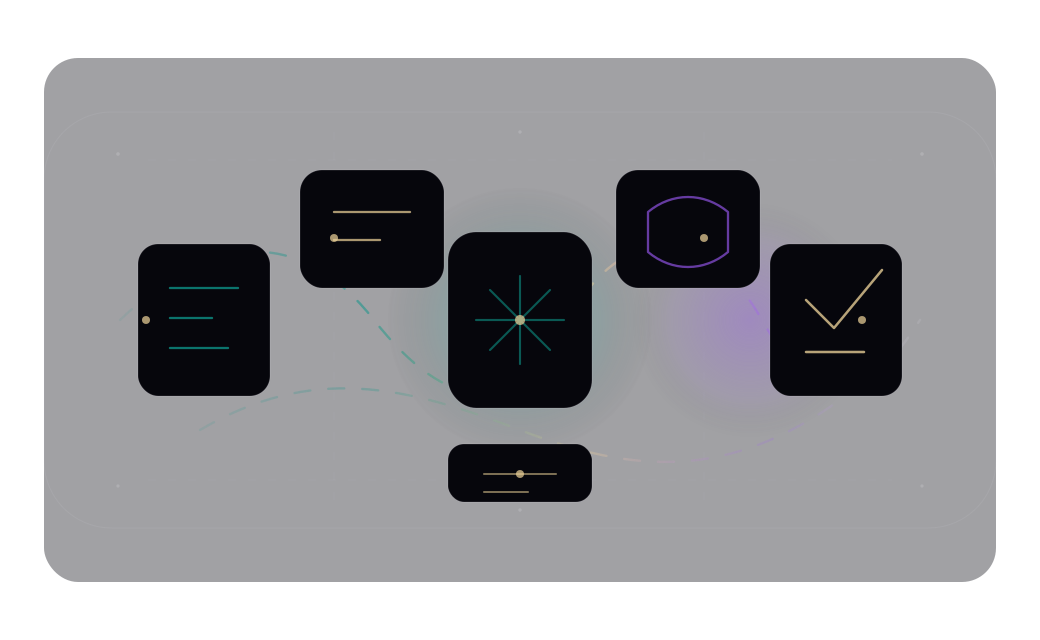
01Problem signal
The organism detects a repeated failure, missing capability, or domain need that cannot be solved by prompting harder.
02Research packet
The domain, risks, tools, memory needs, authority limits, and proof requirements are written down before code exists.
03Candidate cell
A proposed cell is generated or implemented as inert source, scoped to one job and one authority boundary.
04Sandbox trial
The candidate runs in a sterile environment with tests, logs, dependency checks, and no default host authority.
05Immune review
Risk gates decide whether the cell can proceed, needs changes, should be refused, or must ask the creator.
06Integrated skill
Only approved, tested cells become part of the organism, with source control, rollback path, and public proof attached.
Pick a cell request and see how the organism keeps mutation governed.
A brain that builds brains needs a visible operating surface. Every request is routed through signal, cell path, proof bar, and authority boundary before the new capability can touch the organism.
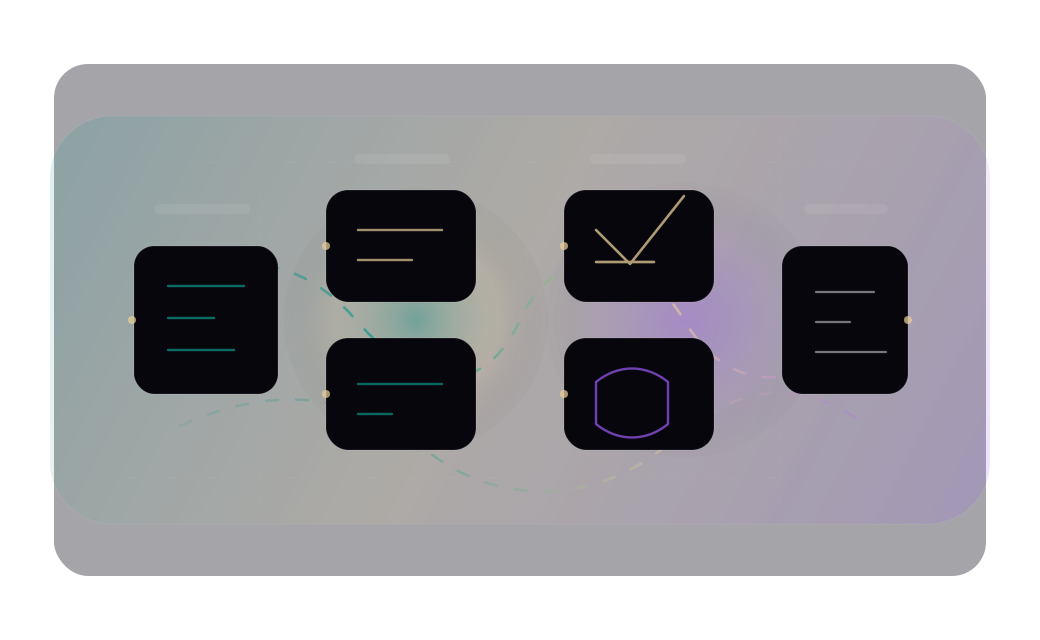
Cell growth protocol.
Research
Define the domain, constraints, risks, and proof requirements.
Architecture
Map inputs, memory, tools, authority, and fallback behavior.
Sandbox
Run code in a sterile environment before trusting it.
Approval
Filesystem, money, and public channels pause for human consent.
Proof
Tests and transmissions leave an inspectable trail.
Why it matters.
Self-evolving systems need more than generation. They need a nervous system, an immune system, and an audit trail. Brain Cell Architecture is how Unwind turns neurogenesis into governed software instead of uncontrolled mutation.
Read the whitepaper