State capture
The user names where they are now without needing to translate emotion into technical language.
A personal organism should not trap users in dashboards. Infinity Mirror is designed to name the current state, surface the pattern, and convert insight into a safer next action.
Infinity Mirror turns state capture into pattern recognition and then into a grounded next action, while keeping care, identity, and authority human.
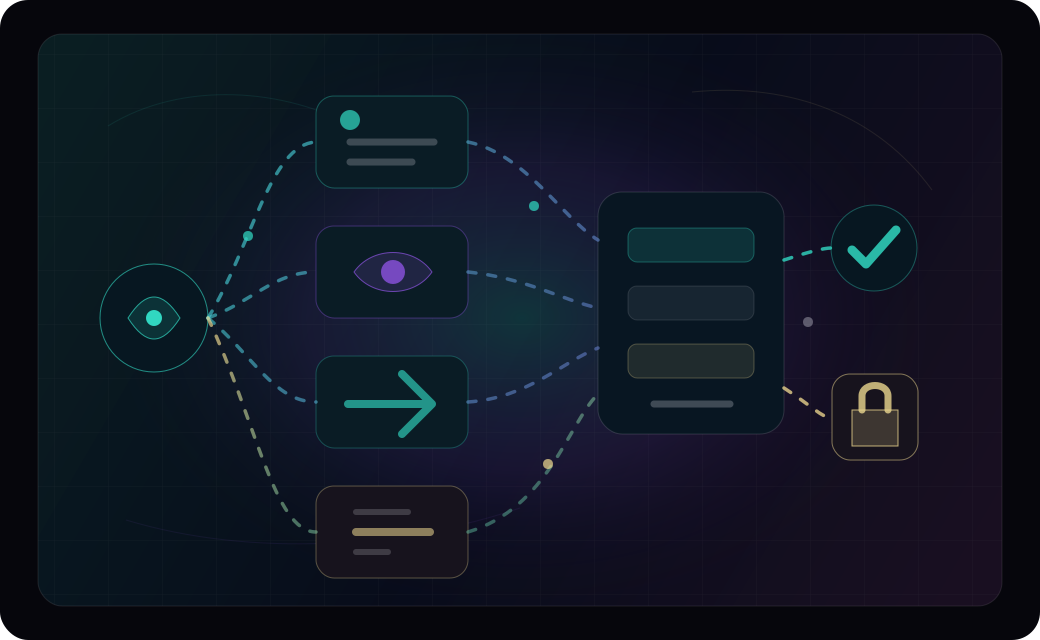
A reflective organism should return something the person can review, edit, or reject. This router shows which packet comes back first, where proof lives, and which human boundary stays closed.
Before the experience becomes emotional, the product path names the actual system boundaries: input, output, memory, tool authority, approval, and proof. Reflection is allowed to clarify; it is not allowed to become hidden judgment.
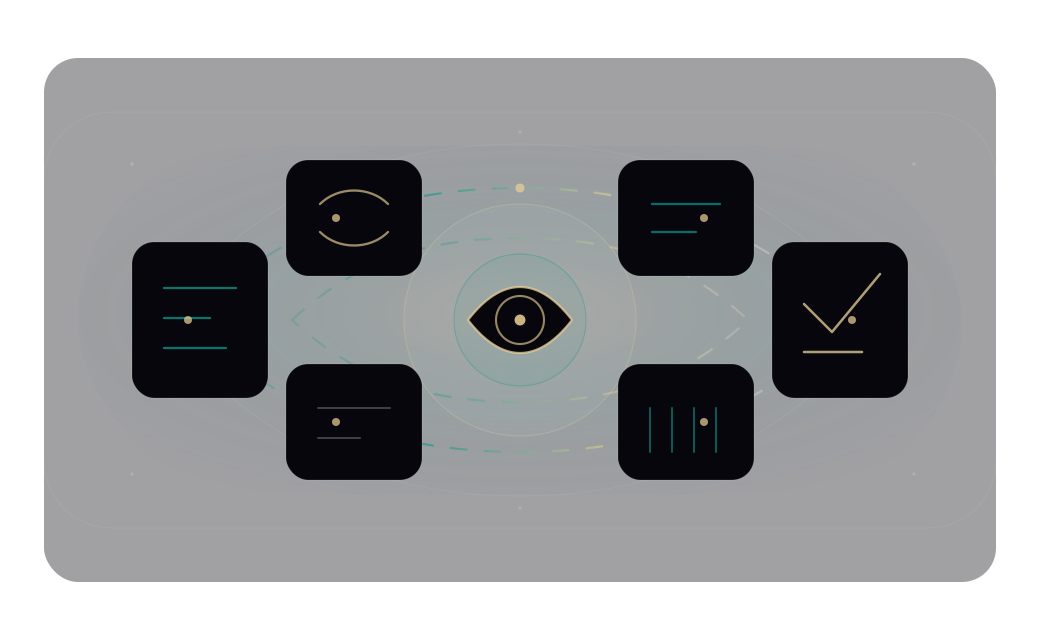
The mirror can receive current state, pressure, intention, friction, and language from the user without forcing it into a productivity category.
Pattern memory can help reflection avoid starting from zero, but remembered material must stay inspectable, reversible, and subordinate to the person.
The mirror can convert insight into a small step, proof question, repair, or boundary the user chooses. Motion stays human-owned.
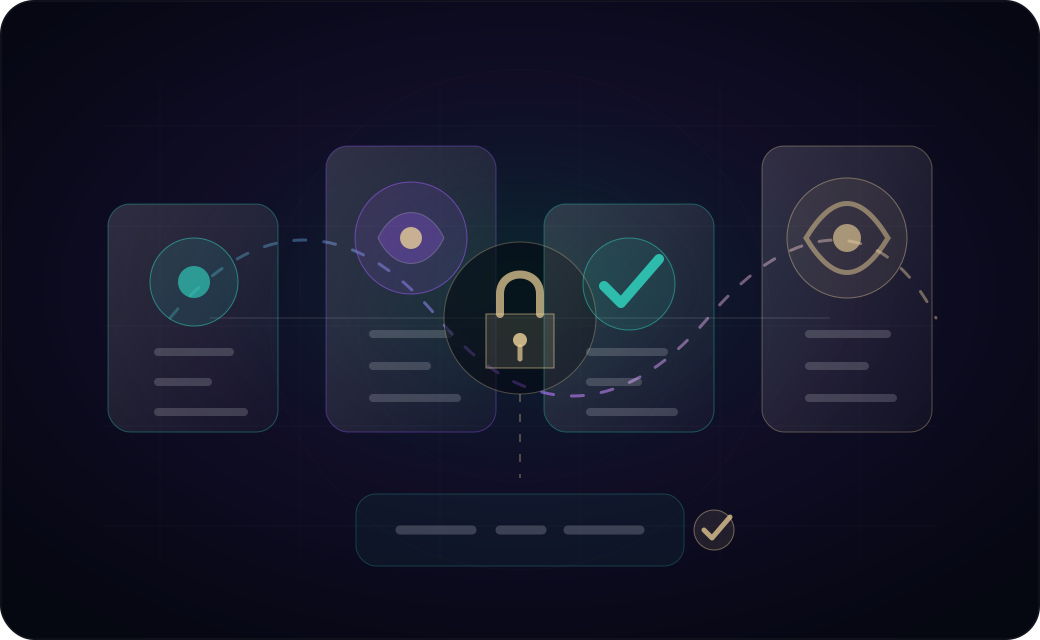
A trustworthy mirror must know when not to be the answer. If the request touches safety, diagnosis, crisis, or professional support, the product posture becomes handoff.
The mirror earns trust by showing the path from what the user names now to the pattern that keeps returning, the reflection that clarifies it, and the next action that remains under human authority.
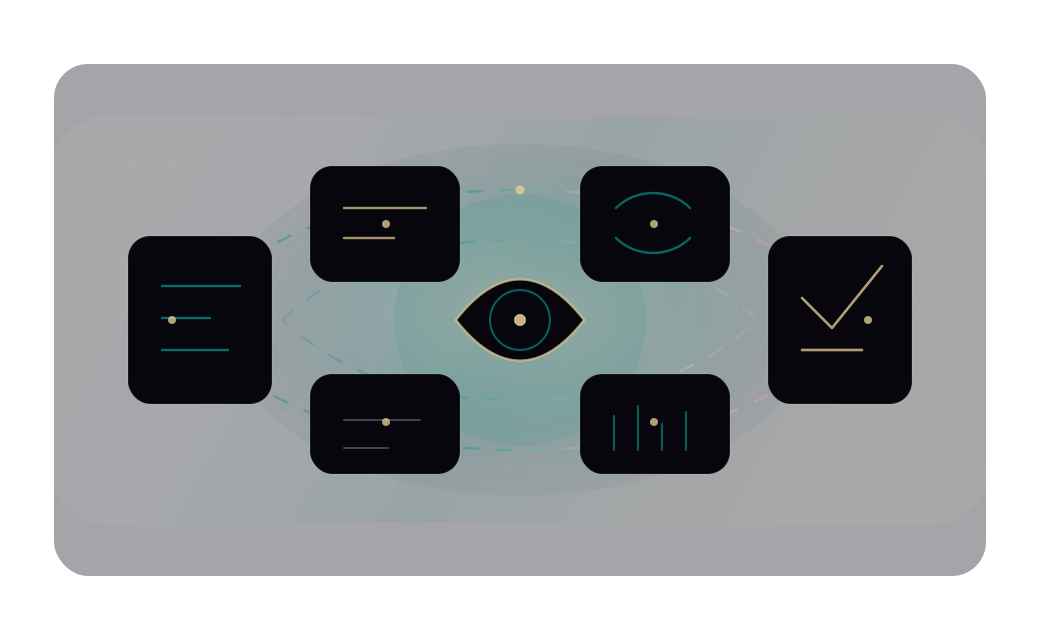
The user names what is happening now in plain language, without needing to convert emotion into a productivity taxonomy.
The organism compares the current state with prior loops, changes, and signals so reflection has continuity instead of starting over.
The mirror names the useful pattern, preserves uncertainty, and separates observation from interpretation.
The system surfaces the blocking loop without turning it into identity, diagnosis, or destiny.
The output becomes one concrete step the user can choose, reject, or adapt instead of an endless analysis spiral.
The mirror reflects and suggests; care, judgment, identity, and professional support stay human-led.
Infinity Mirror becomes trustworthy when the user can see the state signal, what memory is allowed to inform, what next action is suggested, and where the mirror stops.
Where the Brain architecture works with cells and proof, Infinity Mirror works with state, reflection, and identity continuity.
The user names where they are now without needing to translate emotion into technical language.
Reflection has value because the system remembers the recurring loop and how it changed.
The organism converts insight into a grounded step instead of more abstract self-analysis.
The tool reflects and suggests. It does not replace human judgment, care, or professional support.
Infinity Mirror is an active prototype and design lane. The public proof artifact is Transmission 24, which explains why the product is becoming a mirror that changes when the user speaks, not another wellness dashboard.
Read Transmission 24