Financial organisms choose clarity before motion.
The Financial Survival Organism exists to protect attention, capital, and decision quality. Its public posture is research and simulation first: no hidden wallet authority, no broadcast path, and no financial motion without explicit human approval.
Web3 intelligence earns trust by refusing hidden authority.
The page frames Financial Organisms as research-first systems: they can study, simulate, score, and prepare evidence, but money motion stays behind human approval.
- Stage
- Research lane for Web3 simulation and safety design.
- Input
- Read-only market context, wallet state, protocol data, and operator intent.
- Cells
- Research, simulation ledger, risk scoring, approval packet, and proof review.
- Boundary
- No private-key handling, no hidden broadcast path, no money motion by default.
- Proof
- Transmissions 22 and 23 document clarity-before-motion and self-locking safety gates.
Choose the Web3 question, then inspect the first artifact before trust grows.
Financial Organisms should not make every visitor decode the same safety stack. This router translates builder, investor, operator, and protocol-team intent into the first review packet, proof route, and authority lock they need.
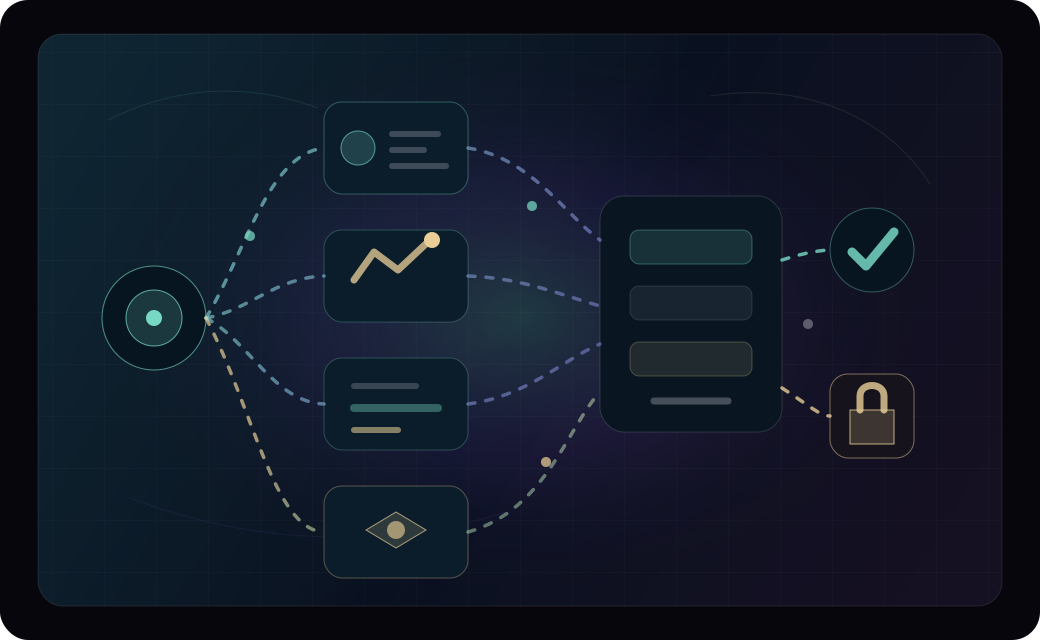
What Financial Organisms can study, what they cannot touch, and where proof lives.
Before any Web3 map becomes visual, the research lane names the actual authority boundary: read-only context, off-chain simulation, unsigned review packets, explicit approval, and locked broadcast by default.
-
01 / Read
Turn public and supplied context into a read-only state packet.
The organism can inspect market context, wallet state, protocol data, and operator intent without receiving custody or signing authority.
- Input
- Public market data, supplied wallet state, protocol context, and operator intent.
- Output
- A normalized read-only context packet with source and timestamp notes.
- Blocked claim
- No private keys, seed phrases, signatures, custody, or hidden wallet access.
- Proof route
- Inspect the trust layer
-
02 / Simulate
Model possible routes without creating live transactions.
Simulation can compare scenarios, deltas, stale data, liquidity, slippage, and risk flags while every result remains off-chain and unsigned.
- Tool boundary
- Off-chain simulation only; no wallet calls, approvals, allowances, or contract writes.
- Output
- Scenario deltas, risk notes, unresolved assumptions, and stop conditions.
- Blocked claim
- No swap, deposit, revoke, liquidation, governance vote, or transaction broadcast.
- Proof route
- Open the simulation console
-
03 / Packet
Return evidence, not financial authority.
A useful financial organism prepares review material: assumptions, sources, risk explanations, confidence, rollback notes, and questions a human should answer before motion.
- Memory boundary
- Only reviewed observations and public proof should shape future financial packets.
- Output
- Unsigned review packet, risk score, evidence list, and approval questions.
- Blocked claim
- No investment advice, guaranteed yield, trade signal, or individualized financial recommendation.
- Proof route
- Read clarity before motion
-
04 / Lock
Keep signing, custody, broadcast, and money motion outside automation.
The authorized human, DAO, or multisig owns every final financial decision. The organism can clarify the packet; it cannot become the hand that moves funds.
- Approval boundary
- Signing, custody, transfers, votes, wallet approvals, public claims, and spend require explicit human authority.
- Output
- A pause, refusal, or reviewed next-step packet.
- Blocked claim
- No hidden broadcast path, private-key handling, automatic trade, wallet write, or public money promise.
- Proof route
- Inspect the authority gate
On-chain intelligence stays off-chain until approval is explicit.
The organism can observe public context, simulate outcomes, and prepare an unsigned packet. The authority boundary is visible: no private keys, no hidden broadcast, no money motion by default.
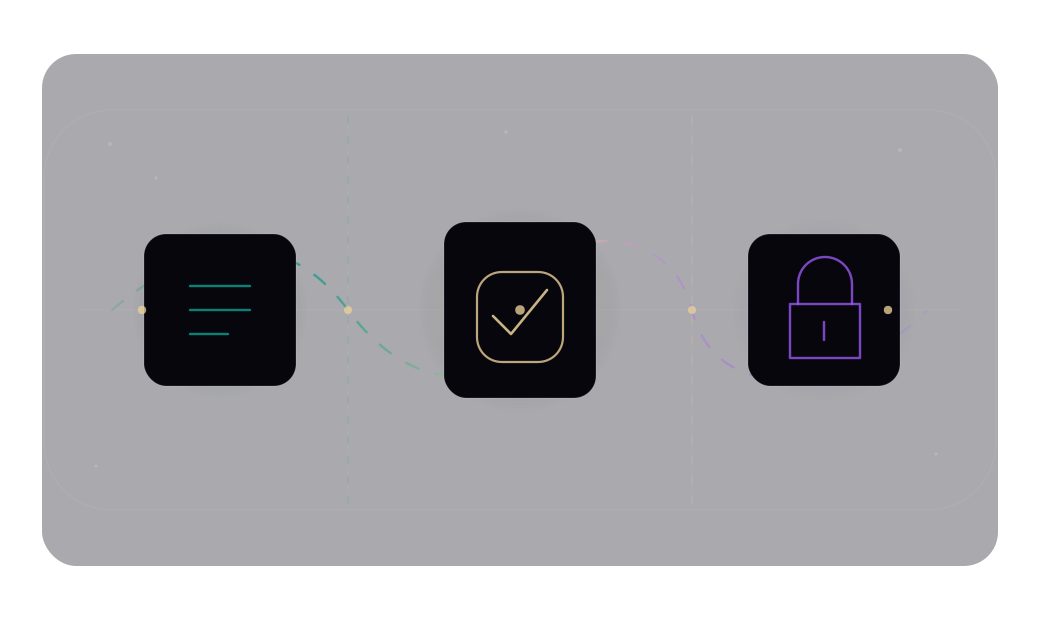
01Read-only context
Wallet, protocol, and market state are observed without private-key access.
02Off-chain simulation
Potential actions become decoded simulations before any live authority exists.
03Risk interpreter
The organism names deltas, stale data, slippage, and boundary flags in plain language.
04Unsigned review packet
The output is evidence for a human, not a transaction broadcast path.
05Creator approval
Financial motion requires explicit consent from the operator before execution can be considered.
06Broadcast locked
No broadcast by default keeps research separate from live wallet authority.
Custody stays with the signer; the organism stays in evidence.
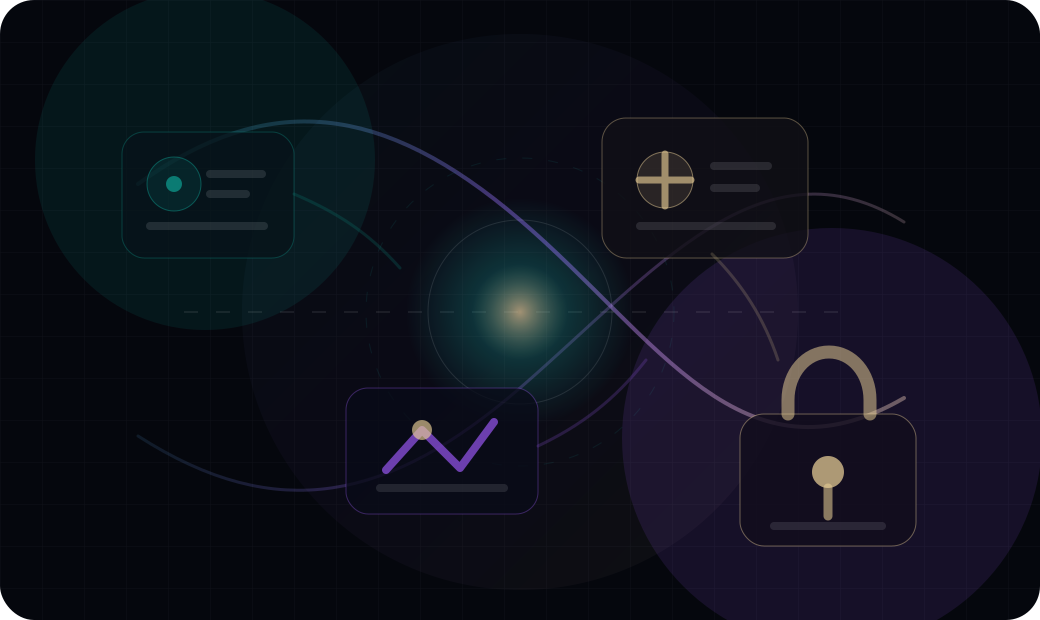
Before a simulation feels actionable, the page names who owns each Web3 authority lane. Financial Organisms can read, model, and packetize; humans, DAOs, or multisigs keep custody, approval, and broadcast.
-
01
Read-only observer
- Organism may
- Inspect public or supplied state, source age, labels, and wallet-visible context.
- Locked authority
- No seed phrases, private keys, account takeover, wallet session, or identity inference.
- Proof return
- A provenance note that says what is known, stale, missing, or unsafe to use.
-
02
Simulation cell
- Organism may
- Model scenarios off-chain and name deltas, risk flags, and rollback assumptions.
- Locked authority
- No transaction object, contract write, approval request, allowance, or live price polling.
- Proof return
- A bounded scenario record with assumptions, confidence, and unresolved questions.
-
03
Approval owner
- Organism may
- Name the human, DAO, multisig, or reviewer who must decide the next move.
- Locked authority
- No implied consent, custody handoff, signer ambiguity, or background financial advice.
-
04
Broadcast lock
- Organism may
- Return a packet, refusal, or request for more context with the lock still visible.
- Locked authority
- No wallet approval, signing, spend, vote, public claim, transaction broadcast, or money motion.
A Web3 organism earns authority by showing exactly where evidence stops.
This router turns the product path into one inspectable loop: permission to use a source, read-only chain context, off-chain simulation, unsigned packet, and a broadcast lock that remains closed until a human acts elsewhere.
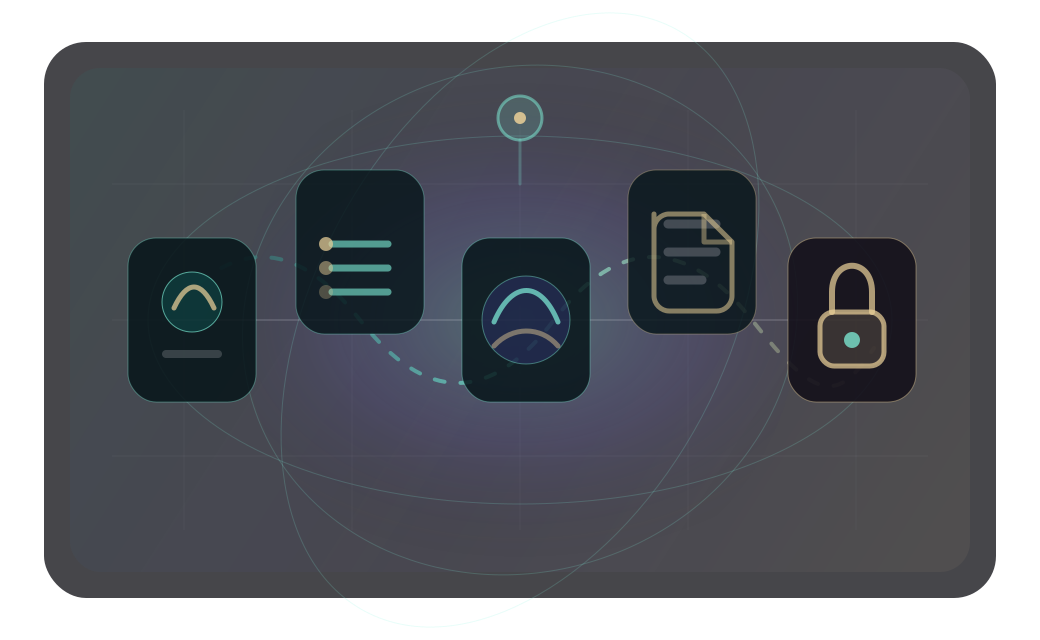
Choose a Web3 request and watch authority stop before motion.
This is the product promise in miniature: the organism can turn intent into evidence, but the output remains an unsigned packet until the operator approves the next move.
The organism returns a packet, not a transaction.
After simulation, the product path becomes concrete: intent, source freshness, scenario deltas, risk stops, approval question, and locked broadcast status are assembled into a reviewable packet a human can accept, revise, or refuse.
The broadcast path stays locked until ownership, risk, and approval are named.
The deck shows how a review packet can approach value motion without becoming a transaction: source freshness, off-chain delta, risk budget, custody owner, approval question, and the final broadcast lock remain visible.
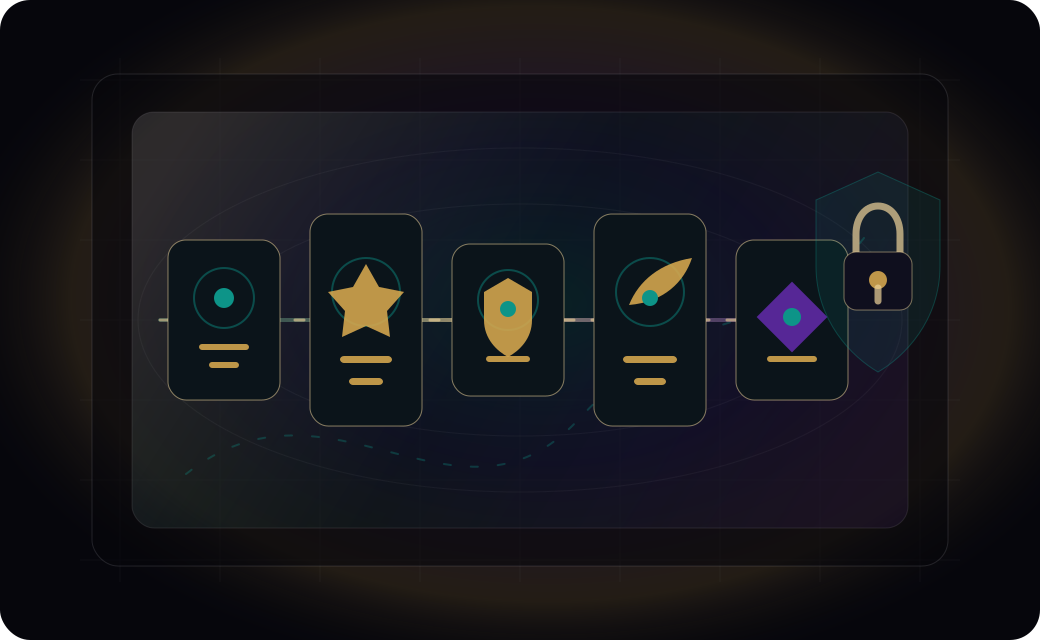
Source freshness
Names chain, block or time, protocol source, exclusions, stale-data caveat, and unresolved gaps before a packet can feel current.
Off-chain delta
Keeps scenario math, slippage assumptions, liquidity notes, and rollback assumptions separate from transaction construction.
Risk budget
States exposure change, failure modes, confidence, and advice boundary before any recommendation language can appear.
Custody owner
Names the human, DAO, or multisig that owns signing authority while private keys and wallet approvals stay outside the organism.
Approval question
Turns next motion into a precise human decision with refused alternatives and the safe route if context is missing.
Broadcast lock
Leaves private keys, wallet calls, transaction signing, public claims, spend, and Web3 broadcast unavailable by default.
A simulation can approach value motion only when every proof gate is named.
Financial Organisms reinterpret product trust as a value-motion gate: source freshness, risk budget, authority owner, rollback path, and public proof must be inspectable before any human considers motion.
-
01 / Source
Provenance and freshness must be visible.
- Proof required
- Chain, block or time, protocol source, exclusions, and stale-data note.
- Decision rule
- If sources are stale, return a refusal or research note.
- Stop condition
- No motion from unsourced market claims, screenshots, or private rumors.
-
02 / Risk
Risk budget must be explicit before any route is discussed.
- Proof required
- Slippage, liquidity, exposure delta, failure mode, confidence, and rollback assumption.
- Decision rule
- If the risk owner cannot accept the bound, hold.
- Stop condition
- No yield promise, liquidation instruction, or individualized advice.
-
03 / Authority
Signer and approval path must stay outside the organism.
- Proof required
- Human, DAO, or multisig owner; approval text; unsigned packet; explicit custody boundary.
- Decision rule
- If authority is ambiguous, no signing route is prepared.
- Stop condition
- No private keys, wallet approvals, account access, or broadcast.
-
04 / Return
The organism returns proof, not a transaction.
- Decision rule
- Approve, revise, simulate again, or refuse with the boundary still visible.
- Stop condition
- No deploy, post, spend, wallet write, private data pull, or Web3 broadcast without explicit approval.
The final output is an inspectable receipt, not an executable transaction.
After readiness, the organism returns a receipt that separates request, sources, simulation delta, risk owner, human decision, and broadcast lock. It gives a builder or protocol team something to review without implying wallet authority.
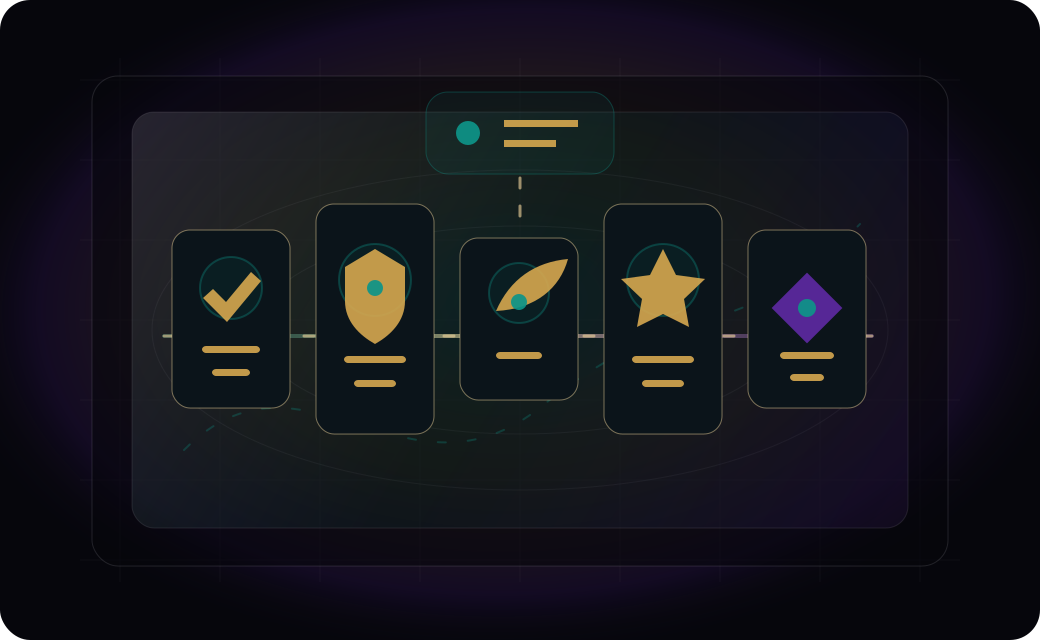
Request record
Names the operator intent, allowed context, excluded authority, timestamp, and the reason this stays review-only.
Source bundle
Keeps chain, protocol source, block or time, stale-data note, and missing context visible beside the conclusion.
Simulation delta
Records scenario math, exposure change, slippage assumption, rollback assumption, and confidence without preparing a transaction.
Risk owner
States who must accept the risk, what remains unresolved, and what would force a refusal or another simulation pass.
Human decision
Frames approve, revise, pause, or reject as a human-owned choice, never as background automation.
Broadcast lock
Closes the receipt with wallet connection, approvals, signatures, spends, transaction objects, and Web3 broadcast still unavailable.
Safety boundary.
Web3 autonomy is only credible when the site says what the organism cannot do.
Read-only research
Wallet and market context are studied without private-key access.
Simulation ledger
Potential actions become decoded, unsigned review records.
Risk score
The organism explains expected deltas, stale data, and risk flags.
Human approval
Money movement requires explicit operator consent.
No broadcast by default
Research remains separate from live wallet authority.