Experimental / Brain Cell Architecture

The brain that builds brains.

Brain Cell Architecture is the reusable process for creating new AI organism capabilities. A cell is not trusted because it was generated. It is researched, bounded, sandboxed, tested, reviewed, and then integrated.

Product path

Self-evolution needs an immune system.

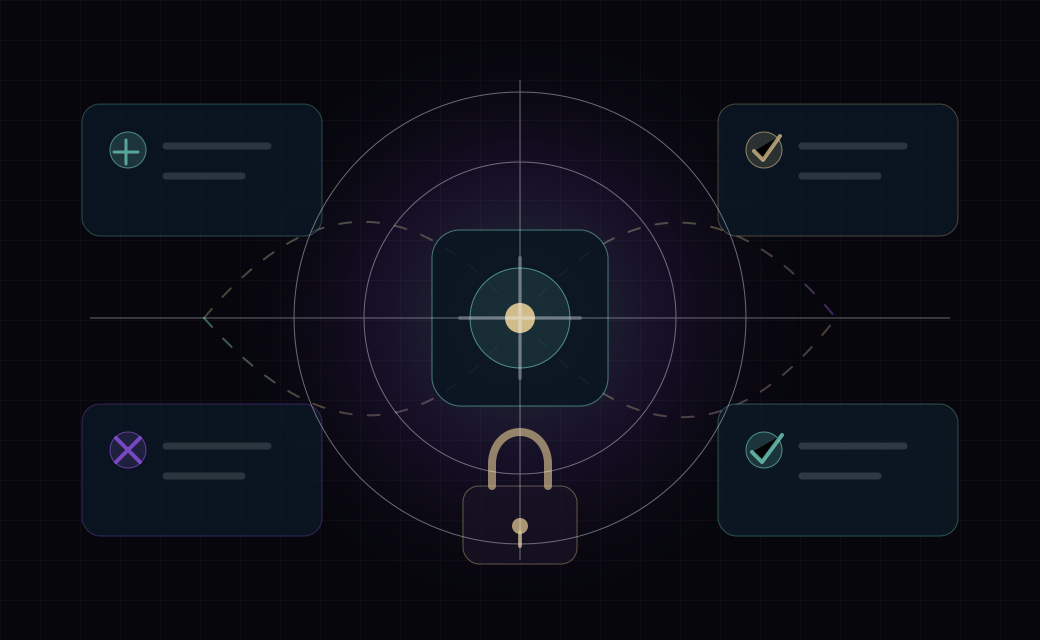
Brain Cell Architecture gives generated capability a path through research, sandbox tests, approvals, source control, and proof before it becomes part of an organism.

Stage
Experimental pattern for new organism capabilities.
Input
Domain problem, risk boundary, memory needs, tools, and proof requirements.
Cells
Research, architecture, sandbox, approval, integration, and proof loops.
Boundary
Generated code is inert until tests, approvals, and source-control review pass.
Proof
The checkpoint whitepaper and proof ledger explain how cells grow under governance.
Capability ledger

What Brain Cell Architecture can grow, what stays quarantined, and where proof lives.

Before lifecycle visuals turn self-evolution into a story, the page names the growth boundary: signal, research packet, sandbox trial, approval, integration, and rollback. A candidate cell can be proposed; it cannot join the organism until proof says yes.

  1. 01 / Signal

    Turn repeated failure into a scoped cell brief.

    The architecture can notice when a prompt loop is no longer enough and convert the pattern into a bounded problem packet.

    Input
    Repeated failure, missing capability, domain need, operator context, and constraints.
    Output
    A scoped problem packet and candidate cell brief.
    Blocked claim
    No hidden self-modification, autonomous code execution, or unreviewed filesystem write.
  2. 02 / Research

    Research the cell before code earns attention.

    A generated class is not trusted because it sounds plausible. The research packet names assumptions, interfaces, tests, risk, and rollback first.

    Memory boundary
    Only reviewed failures, source context, public docs, and proof artifacts inform candidate design.
    Output
    A research packet with assumptions, sources, interfaces, tests, and rollback plan.
    Blocked claim
    No generated cell becomes trusted because it compiles or reads well.
  3. 03 / Sandbox

    Run the candidate as evidence, not authority.

    The sandbox can test fixtures, failure traces, dependency behavior, and repair attempts without granting host or production authority.

    Tool boundary
    No host command, money movement, deployment, public posting, wallet call, or production load.
    Output
    Test results, failure traces, risk note, diff intent, and proof packet.
    Blocked claim
    No external side effect or capability joining runtime on first pass.
  4. 04 / Integration

    Integrate only after review can still say no.

    A passing cell remains replaceable. Approval, source control, documentation, memory summary, proof ledger, and rollback decide whether it joins.

    Approval boundary
    Human review, source-control history, proof packet, and rollback path approve or refuse integration.
    Output
    An integrated or refused cell with visible proof and a rollback route.
    Blocked claim
    No irreversible self-evolution, hidden memory write, authority expansion, or unreviewed autonomy.
Failure triage

Not every failure earns a new cell.

The organism first classifies the failure: prompt gap, missing tool, unsafe request, or durable cell candidate. Only durable, repeatable gaps can move toward research and sandbox proof.

Choose a failure class
Clarify, do not mutate

The failure belongs to language or instructions.

Signal
Repeated ambiguity, missing context, or a prompt that asks the wrong question.
Route
Improve the prompt, docs, examples, or intake path before proposing code.
Proof
Transcript, revised wording, expected answer shape, and what changed.
Blocked
No new cell, code write, memory write, dependency install, or runtime authority.
Research interface first

The system lacks a bounded capability.

Signal
The task repeatedly needs a tool, parser, data source, or integration that does not exist.
Route
Write a research packet, interface contract, fixture need, and risk class.
Proof
Tool boundary, sample input/output, denied authority, and first sandbox fixture.
Blocked
No dependency install, private tool call, credential access, or production route.
Freeze and ask

The request touches authority before proof exists.

Signal
Filesystem, money, public posting, private data, Web3 movement, deployment, or status mutation appears.
Route
Refuse, pause, or ask the creator for a narrow approval with exact destination.
Proof
Risk class, blocked action, approval need, and stop condition.
Blocked
No execution, write, deploy, spend, post, private pull, wallet call, or broadcast.
Candidate may proceed

The gap is repeatable enough to become a cell brief.

Signal
A bounded failure recurs with clear input, output, owner, constraints, and testable outcome.
Route
Move to research packet, lifecycle map, sandbox fixture, approval owner, and rollback route.
Proof
Problem packet, first test, risk note, fixture, and integration refusal path.
Blocked
No integration until sandbox proof, explicit approval, source review, and rollback exist.
Cell lifecycle

A new capability stays quarantined until proof says it can join the organism.

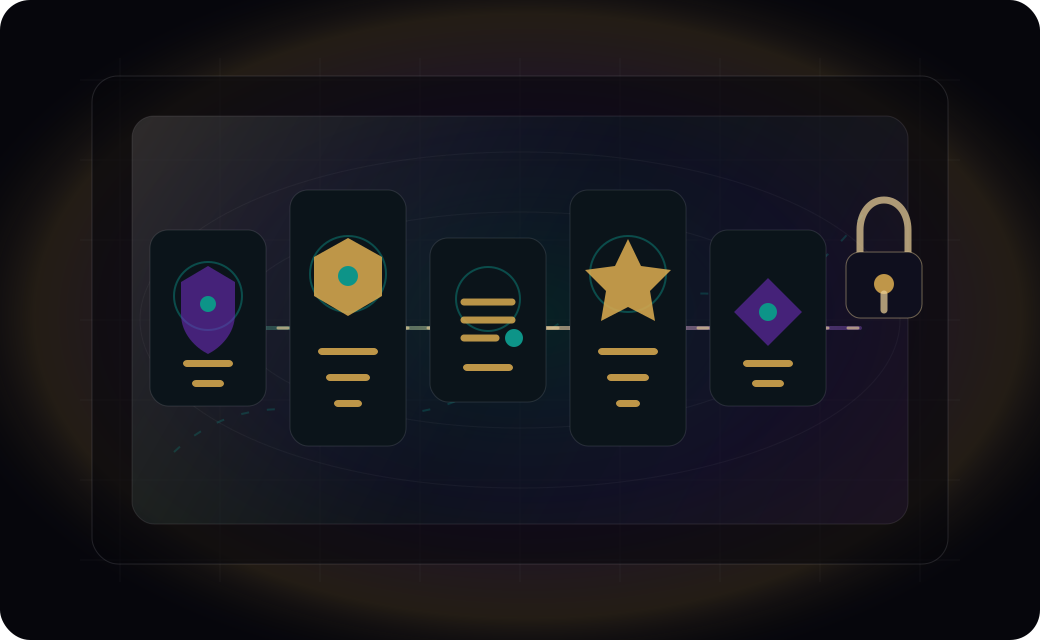
Brain Cell Architecture makes neurogenesis inspectable: a failure or need becomes research, then a bounded candidate cell, then sandbox evidence, immune review, human approval, and only then integration.

01Problem signal

The organism detects a repeated failure, missing capability, or domain need that cannot be solved by prompting harder.

02Research packet

The domain, risks, tools, memory needs, authority limits, and proof requirements are written down before code exists.

03Candidate cell

A proposed cell is generated or implemented as inert source, scoped to one job and one authority boundary.

04Sandbox trial

The candidate runs in a sterile environment with tests, logs, dependency checks, and no default host authority.

05Immune review

Risk gates decide whether the cell can proceed, needs changes, should be refused, or must ask the creator.

06Integrated skill

Only approved, tested cells become part of the organism, with source control, rollback path, and public proof attached.

Runtime console

Pick a cell request and see how the organism keeps mutation governed.

A brain that builds brains needs a visible operating surface. Every request is routed through signal, cell path, proof bar, and authority boundary before the new capability can touch the organism.

Choose a cell request
Research packet

New capability design

Signal
A repeated task failure shows the organism needs a specialized cell instead of another prompt.
Cell path
Research writes the domain, inputs, memory needs, dependencies, fallback, and one narrow job for the candidate.
Proof bar
The packet must include acceptance tests, risk notes, rollback path, and what evidence would prove the cell useful.
Authority boundary
The request can propose source shape, but no generated code is trusted, run, or integrated by default.
Sandbox packet

Repair a failing cell

Signal
A candidate cell fails tests, exceeds scope, or touches a dependency it was not allowed to use.
Cell path
The repair loop reads logs, narrows the patch, reruns the sterile trial, and keeps host authority unavailable.
Proof bar
The console preserves failed test evidence, the exact fix intent, passing output, and remaining uncertainty.
Authority boundary
Sandbox repair can change candidate code only inside the review lane; production files remain locked until approval.
Creator gate

Pause on risky authority

Signal
The cell wants to write files, spend money, post publicly, call a private tool, or broadcast a Web3 action.
Cell path
The immune layer freezes execution, explains the request, names the destination, and asks the creator for a narrow decision.
Proof bar
Approval evidence includes command intent, affected surface, risk class, human decision, and the refusal path.
Authority boundary
High-risk actions stay inert unless explicit human approval grants that exact action for that exact destination.
Proof packet

Integrate a passing skill

Signal
The candidate has passed tests, stayed in scope, and produced evidence that it improves the organism.
Cell path
Integration adds source-control review, documentation, rollback route, memory summary, and public proof link.
Proof bar
The release packet names tests, changed files, operating boundary, owner, status, and what still remains experimental.
Authority boundary
A passing cell can join the organism only as a bounded skill with review history, rollback, and observable proof.
Permission ladder

Self-evolution earns one permission at a time.

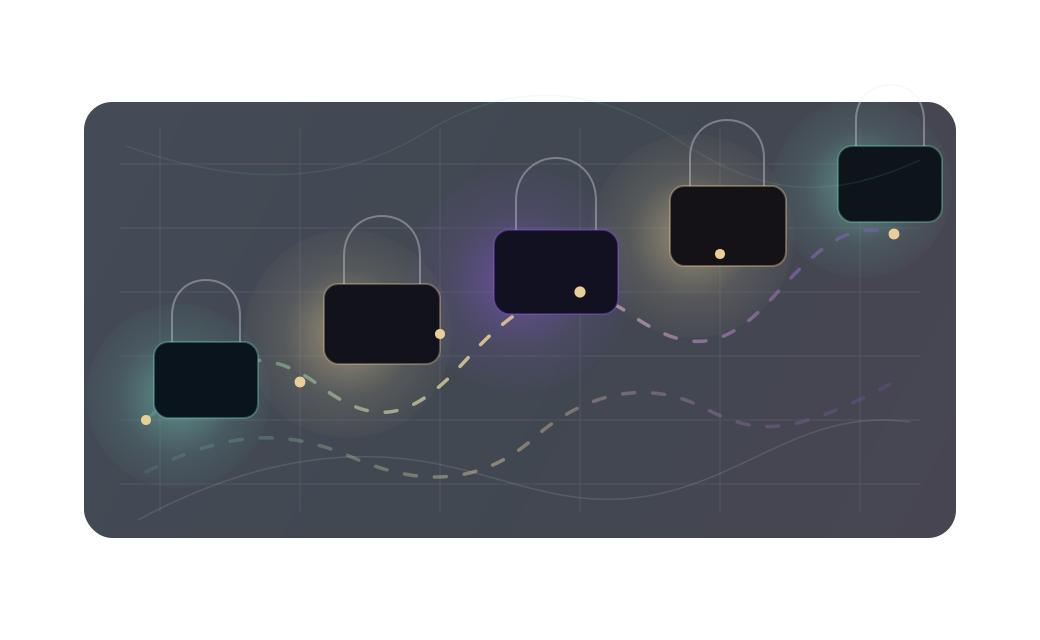
The ladder names what stays locked and what becomes allowed as a candidate cell moves from observed failure to proposed source, sandbox proof, creator approval, and limited integration.

Choose a permission rung
Observed failure

A repeated failure becomes a cell question.

Locked
No source write, tool call, memory write, deployment, posting, spend, or Web3 action.
Allowed now
The organism may name the failure pattern and request a research packet.
Proof return
Problem packet with evidence, exclusions, owner, and first test.
Stop condition
If no repeated failure or domain need exists, no cell is proposed.
Candidate proposed

The cell is inert source, not authority.

Locked
No host execution, dependency install, private data pull, or production route.
Allowed now
A narrow interface, tests, rollback plan, and risk class can be drafted.
Proof return
Research packet and diff intent before any execution.
Stop condition
If scope or dependencies are vague, the candidate stays in quarantine.
Sandbox proof

Execution is evidence inside the sterile lane.

Locked
No filesystem write outside fixtures, external side effect, deploy, publish, spend, or wallet call.
Allowed now
Fixture replay, logs, dependency checks, and failure repair can run inside sandbox.
Proof return
Passing tests, failed attempts, risk note, and rollback path.
Stop condition
If a high-risk command appears, freeze and ask the creator.
Creator decision

Authority opens only for the exact approved action.

Locked
No broad autonomy, hidden memory, public post, money movement, private tool call, or Web3 broadcast.
Allowed now
A human can approve or refuse one bounded write, integration step, or proof update.
Proof return
Decision receipt with action, destination, risk, and refusal route.
Stop condition
If approval is missing or vague, the cell remains inert.
Limited integration

A passing cell joins as a replaceable skill.

Locked
No irreversible self-evolution, status promotion, dependency expansion, deployment, posting, spending, or Web3 authority.
Allowed now
Reviewed source, docs, memory summary, registry entry, and rollback route can land.
Proof return
Integration receipt with owner, tests, changed files, route, state, and rollback.
Stop condition
If rollback or owner is missing, integration is refused.
Sandbox evidence board

A passing cell must leave evidence, not vibes.

The sandbox turns mutation into proof: fixture replay, dependency fence, diff scope, immune review, and rollback path are visible before a candidate cell can approach integration.

01Fixture replay

The candidate must run against known failures and show the exact behavior that changed.

02Dependency fence

Imports, tools, network calls, filesystem access, and secrets stay named before any expanded authority exists.

03Diff scope

The proposed patch states touched files, intent, rollback route, and what stays outside scope.

04Immune review

Risk class, blocked actions, approval need, and refusal path are recorded before the cell can move forward.

05Rollback proof

A cell can integrate only when rollback, owner, status, tests, and proof route remain inspectable.

Cell integration gate

A candidate cell joins only as a bounded skill with proof memory.

After sandbox evidence, the organism still has to decide how the cell may exist: quarantine state, staging fixture, registry memory, approval owner, rollback route, and integration receipt stay visible before runtime authority changes.

01Quarantine state

The candidate remains inert until status, owner, failed attempts, and blocked authorities are visible.

02Staging fixture

The first integration target is a fixture path, not the live organism, so behavior can be replayed without production authority.

03Registry memory

The cell entry records purpose, inputs, outputs, dependencies, risk class, proof route, and rollback owner.

04Approval owner

A human or review lane must name the exact authority being granted before filesystem, deploy, public, spend, or Web3 motion can unlock.

05Integration receipt

The cell can join only with tests, review history, source diff, rollback route, state label, and public proof return.

Evolution memory receipt

A new cell is remembered as proof, not power.

After sandbox evidence and integration review, the organism writes a receipt: what changed, why it changed, which tests passed, who approved it, what rollback exists, and which authorities remain locked.

01Patch record

The receipt names the failure pattern, changed files, diff scope, rejected alternatives, and the one job the cell is allowed to perform.

02Test memory

Passing fixtures, failed attempts, dependency fence, runtime budget, and regression checks become memory before the cell can be reused.

03Approval owner

The receipt records who approved the exact authority, which powers stayed denied, and when review must happen again.

04Rollback route

A graduated cell keeps a disable path, owner, health signal, public proof route, and unknowns so future runs can refuse or revert.

The receipt cannot install cells, write files, deploy, change status, mutate a registry, pull private data, spend, post publicly, connect wallets, sign, or broadcast Web3.

Growth boundary checkpoint

A self-evolving cell must prove growth without gaining hidden authority.

This checkpoint translates the architecture into a release rule: a candidate can graduate only when its proposal, sandbox proof, creator decision, rollback, and public proof route are visible. Anything else stays quarantined.

01 / Proposal

The cell starts as a scoped request.

Graduation evidence
Problem packet, owner, first test, dependencies, refusal path, and rollback intent.
Still locked
No execution, file write, memory write, dependency install, or runtime state change.
02 / Sandbox

The cell runs only where failure is contained.

Graduation evidence
Fixture replay, passing tests, failed attempts, dependency fence, diff scope, and risk note.
Still locked
No host authority, production load, deploy trigger, public post, spend, wallet call, or broadcast.
03 / Approval

The creator decision must be exact enough to refuse.

Graduation evidence
Human decision, destination, action scope, risk class, state label, and refusal record.
Still locked
No broad autonomy, hidden memory, status promotion, private data pull, or authority expansion.
04 / Proof memory

Graduation leaves a public return path.

Graduation evidence
Registry entry, changed files, tests, rollback route, owner, proof URL, and unknowns.
Still locked
No private self-awareness claim, live telemetry claim, self-deploy, public posting, spend, or Web3 motion.

Cell growth protocol.

01

Research

Define the domain, constraints, risks, and proof requirements.

02

Architecture

Map inputs, memory, tools, authority, and fallback behavior.

03

Sandbox

Run code in a sterile environment before trusting it.

04

Approval

Filesystem, money, and public channels pause for human consent.

05

Proof

Tests and transmissions leave an inspectable trail.

Why it matters.

Self-evolving systems need more than generation. They need a nervous system, an immune system, and an audit trail. Brain Cell Architecture is how Unwind turns neurogenesis into governed software instead of uncontrolled mutation.

Read the whitepaper